Start with a Robot Vacuum feeding the Depot
Start Moon Sweepers automation by connecting a Robot Vacuum Mk I dock's capsule output through a Conveyor into the Depot intake. Once Dust reaches the Depot and earns money reliably, add a powered Pressure Chamber between collection and delivery.
Budget for the tool, cleaner and complete belt
The Building Tool costs $50 and opens the construction options needed for automation. A Robot Vacuum Mk I costs $250 and cleans 19 world hexes around its dock, covering two rings. Conveyors cost $0.50 per meter, so an example 30-meter connection brings the tool, vacuum and belt to about $315 before additional power equipment. Choose a practical site near your delivery route and leave money for the connections that make the purchase useful.
Build and test the collection route
- Equip the Building Tool and select Robot Vacuum Mk I so you can place the cleaner.
- Choose mostly dirty ground with room for the dock and outgoing Conveyor, giving the robot useful terrain to clear.
- Rotate the dock's capsule output toward an accessible path to the Depot so its belt can leave cleanly.
- Start a Conveyor at the dock's output, following the arrows away from the dock toward the Depot.
- Extend the belt in connected sections toward the Depot, checking direction at each join; each section can reach up to 30 meters.
- Connect the final section into the Depot's receiving area so arriving capsules can sell automatically.
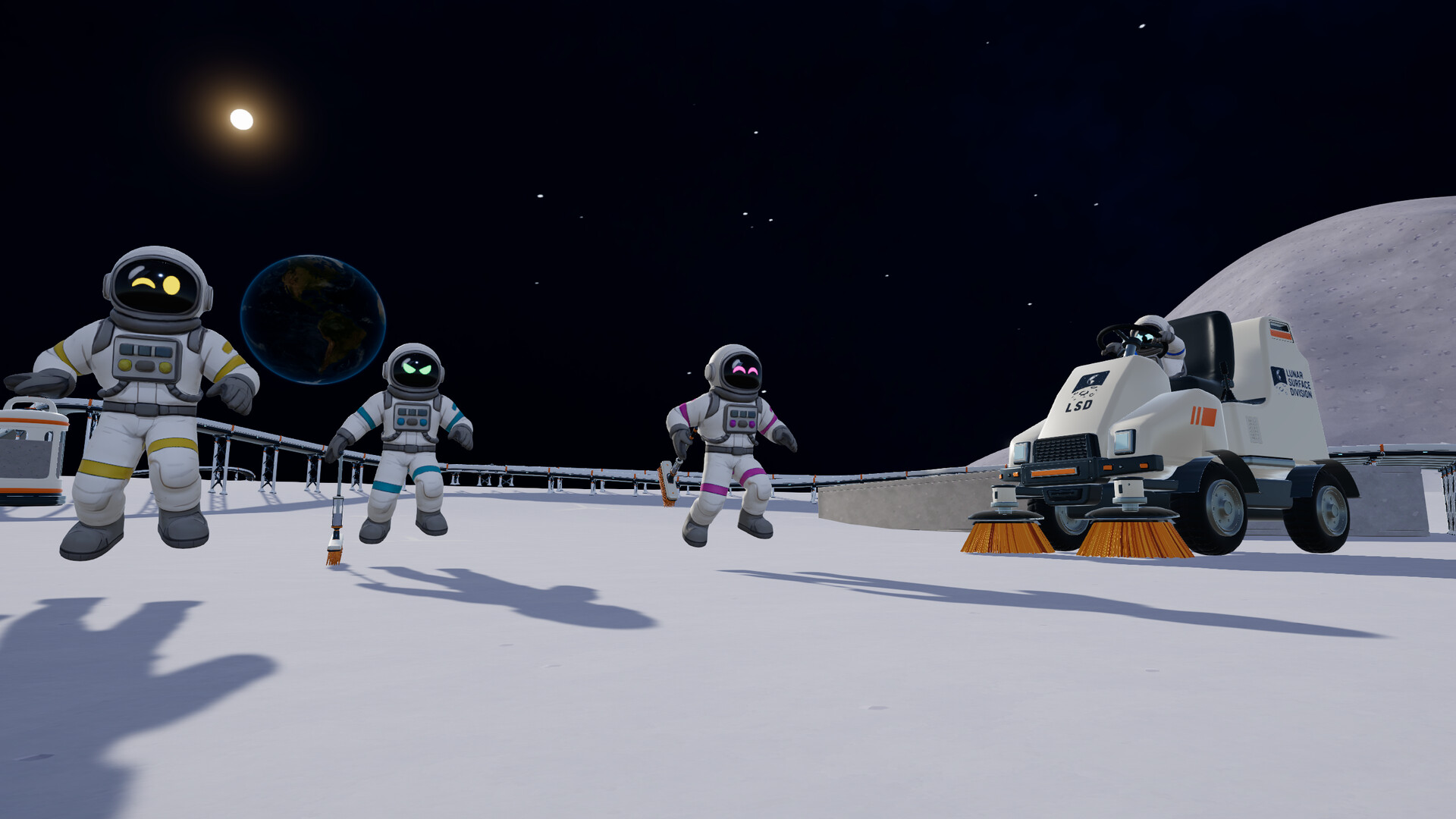
Switch on the connected robot dock to start its cleaning route.Playing this video connects to YouTube.
Give the robot time to collect Dust, return and release capsules before judging the installation. A working route shows ground being cleaned, capsules moving along the belt and money increasing at the Depot. If the cleaner works but your balance stays still, follow its capsules to the stopping point before buying another vacuum.
Insert processing when raw Dust delivery works
Add a Pressure Chamber when raw Dust reaches the Depot consistently and you can fund the machine, belts and electricity together. It costs $500, needs 10 kW and converts Moon Dust into Moon Sand, which sells for three times raw Dust's value. Its listed capacity is up to 5 kg every 12 seconds, while material delivery, power and the outgoing route can reduce actual production.
- Place the Pressure Chamber with its inlet, on the side without the handle, facing the incoming Dust Conveyor so capsules reach the correct port.
- Connect its output to the Conveyor leading to the Depot so finished Moon Sand has a delivery route.
- Provide sufficient solar generation within range of the machinery so the connected processing equipment receives operating power.
- Watch Dust enter the chamber and Moon Sand leave its output to verify that the processing stage works.
Use the power display to compare connected demand with generation and stored charge. Extra solar generation can restore energy during sunlight, while stored power determines whether production continues when sunlight is insufficient. Recheck the network whenever you add machinery, especially if a line that worked during daylight stops in darkness.
Prepare vehicle unloading before a long trip
Build the receiving route before returning with a large vehicle load. The Garage provides vehicle access, while the collector pad and silo handle unloading. Storage still needs an outgoing Conveyor; a vehicle can empty successfully while its Dust waits in the network without earning money.
- Run a Conveyor from the silo's capsule output to the Depot or a processing machine so stored Dust has a destination.
Park the vehicle on the collector pad under the hood so its Dust empties into the silo automatically.Playing this video connects to YouTube.
- Follow the discharged capsules through to the Depot to confirm that unloading becomes a successful delivery.
Any garage can call back, store and upgrade your vehicles, so an expansion does not need a separate fleet for each garage. Demolishing a garage also preserves its vehicles: they move to another garage or wait for the next garage you build. Choose your unloading location around a convenient return trip and a working outgoing belt.
Add Moonstone only when both feeds are ready
Consider a Stone Press after you have Moon Sand, a dependable Dust supply and enough power. It costs $1,000 and consumes 1 kg of Moon Dust plus 1 kg of Moon Sand to make 2 kg of Moonstone every 6 seconds. The press needs 18 kW, bringing a Pressure Chamber and Stone Press together to 28 kW before other equipment. Split incoming Dust so some reaches the press raw and some becomes Sand, then connect the press output toward the Depot.
Find the first persistent queue before expanding
Trace a batch from collection through transport and processing to Depot payment. Find the earliest point where movement stops or a queue keeps growing, then inspect that stage's connections, ingredients and power. After correcting it, let a complete batch reach the Depot before expanding again.
- Capsules stop at a belt end: extend or reconnect that section into a working destination, then check for Depot payment.
- Dust waits outside a Pressure Chamber: check the inlet on the side without the handle, operating power and a clear output before treating the queue as insufficient capacity.
- A Stone Press stays idle: check that raw Dust and Moon Sand reach their separate inputs, then inspect power and the Moonstone output route.
- Production stops in darkness: inspect stored charge and total demand before adding another production machine that would increase the electrical load.
- A powered, correctly connected chamber remains overwhelmed: use a Splitter to feed parallel chambers and a Merger to return their outputs to the Depot route, allowing for added power demand.
A Robot Vacuum can also stop because it has finished the dirty ground within its dock's coverage; extending its Conveyor does not extend that cleaning area. Inspect fresh terrain before placing another dock so its coverage adds useful ground. For later J.O.O.N.A.S collection, distance-related inactivity has been reported, so compare its behavior nearby before buying another collector to address a stalled route.